150
Commercial Gas Users Form Buying Cooperative
by
Brian Meyer - Buffalo News Business Reporter
©
Buffalo News - January 3, 1998
It takes plenty of heat to serve tons of chicken wings
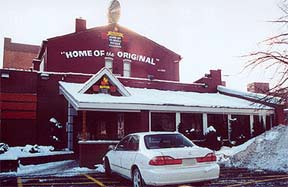
at the Anchor Bar & Restaurant each year, and we
don't mean hot sauce.
 Facing annual gas bills of up to $40,000, the restaurant
managers were intrigued when they heard about the formation
of a natural gas buying cooperative that promised to
save businesses anywhere from 5 percent to 15 percent
on energy bills.
Facing annual gas bills of up to $40,000, the restaurant
managers were intrigued when they heard about the formation
of a natural gas buying cooperative that promised to
save businesses anywhere from 5 percent to 15 percent
on energy bills.
The Anchor Bar is one of the newest members of a buying
group that has attracted more than 150 commercial property
owners since its inception two months ago.
The membership roster includes small manufacturing
operations, apartment buildings, nursing homes and office
complexes in Buffalo, Amherst, Cheektowaga and a dozen
other communities.
Leveraged Energy Purchasing Corp. (LepCorp) of Buffalo
has been retained to provide technical assistance to
the Energy Cooperative of Western New York. Inc., which
buys natural gas at wholesale rates, then distributes
the supplies to members on a non-profit basis.
Ivano Toscani, general manager of the Anchor Bar, said
he was told about the buying cooperative by Buffalo
Common Council member Alfred Coppola.
"We asked plenty of questions, and the answers
made a lot of sense.
We figured if we could save $3,000 or $4,000
a year, why not do it?"
Toscani said.
 Many large energy users have been involved in
buying groups since the mid 1980s.
A growing number of municipalities, including
the city of Buffalo, recently have turned to non-traditional
purchasing arrangements to reduce energy costs.
Many large energy users have been involved in
buying groups since the mid 1980s.
A growing number of municipalities, including
the city of Buffalo, recently have turned to non-traditional
purchasing arrangements to reduce energy costs.
A ruling by the state Public Service Commission last
year permitted smaller users to purchase energy on the
open market from independent firms.
Even residential users have the ability to buy
gas on the open market, although cost efficiencies typically
occur only after buying groups with at least 40 members
are formed.
Utilities have nothing to lose from the new buying arrangements,
according to Julie Coppola, director of public relations
at National Fuel.
"Utilities do not make money on the actual sale
of gas supplies," Ms. Coppola said.
"Our profits come from the use of our system,
so these buying cooperatives have had a neutral effect
on our bottom line."
Dennis M. Frank, vice president of LepCorp, said buying
cooperatives help to empower smaller energy users. "By bundling together many users and giving them wholesale
prices, it allows the little guy to get the same prices
that large industrial users are getting," Frank
said.
One of the biggest concerns expressed by businesses
that have been approached
about the buying cooperative involves servicing.
Toscani said the Anchor Bar didn't want to save
money of fuel bills if it caused any problems in getting
crews to deal with emergency repairs or other trouble
calls.
"Right now, our service has been great,"
he said.
"Whenever we have a problem, National Fuel
is usually here within minutes."
Utility officials stress that members of buying cooperatives
experience no changes in service; National Fuel is still
responsible for maintaining the pipes.
Frank is pleased with the initial response from the
local business community.
He said between 15 and 30 new members are joining
the buying group each month.
Interested parties can call the Energy Cooperative
of Western New York Inc. at 842-1697.
|




 Residential
 Commercial





